
This week, in the series to answer questions regarding National Democratic Congress (NDC), I would like to reply to those who asked about its objectives.
As usual, before I answer the question, let me start with a short story.
Alfred Nobel, who is well known for Nobel Prizes, actually made his fortune in the business of dynamite and explosives. The products he invented and produced have been the basis of the weapons that have devastated the world from the 19th century to date.
In 1888, Alfred Nobel's brother Ludvig Nobel died while visiting the town of Cannes, in Southern France. People and media around the World believed that it was Alfred who had died. A French newspaper erroneously published Alfred's obituary. In the obituary, the newspaper condemned Alfred Nobel for his invention of dynamite. The obituary stated that “the merchant of death is dead” (Le marchand de la mort est mort) and added, "Dr. Alfred Nobel, who became rich by finding ways to kill more people faster than ever before, died yesterday." Upon hearing about the article and discovering how people really viewed him, Alfred was disappointed and became concerned with how he would be remembered. He decided to leave the best legacy after his death.
On 27 November 1895, at the Swedish-Norwegian Club in Paris, Nobel signed his last will and set aside the bulk of his estate to establish the Nobel Prizes, to be awarded annually without distinction of nationality. Among these Prize is the Nobel Peace Prize: a departure from the business of death.
At the creation of National Democratic Congress, the founders asked themselves a question similar to what Alfred Nobel asked himself: how do we want our generation to be remembered?
The choice was simple:
• either as people who would have spent most of their lives tearing each other apart or
• as those who sought, despite all odds, to build a unified society in which all the components of the Rwandan nation would find themselves and feel empowered.
National Democratic Congress chose the latter and gave itself the objective of transforming Rwanda into a progressive unified nation for all Rwandans, a peaceful neighbor, and a reference for all nations; and that, during our lifetime.
On several occasions, we have invited Rwandans and current leaders of Rwanda to join in in this quest.
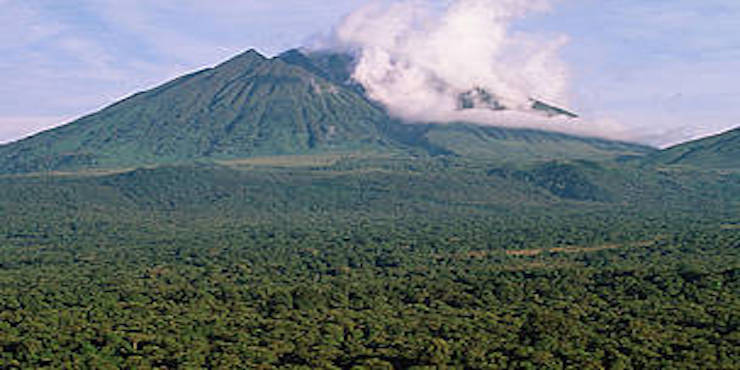
In fact, in Kasiki, on July 31, 2008, In a speech in front of the international community and the medias, I challenged the current leader of Rwanda, General Paul Kagame, to join in the journey, by telling him (see here):
“Mr. Kagame, ouvrez la porte aux Rwandais Réfugiés à travers le monde. En tant qu'ancien réfugié rwandais, vous connaissez aussi leur calvaire quotidien et en tant que Président du pays, vous êtes responsable de leurs mauvaises conditions de vie actuelles”
Following my speech, so many Rwandan leaders, perhaps because they do not know anything else than the anthithesis of peace, unity, and progressive ideas, went after me and other NDC leaders.
For example, according to a US Government’s diplomatic cable, “on August 3, 2008 [a US Congressman] met separately with Great Lakes Envoy Ambassador Richard Sezibera and National Security Service External Affairs Chief Joseph Nzabamwita to discuss events in the eastern Congo.
When asked of the international community's growing concerns about developments in eastern Congo, he[Richard Sezibera] focused his comments on the recent RUD "surrender." Dismissive of the event, he noted that there had been no list of those who surrendered, and no list of what weapons they had turned in. He also advised [the US Senator] that Felicien Kanyamibwa had traveled from the US to Kinshasa and then to the surrender ceremony, and this constituted "solid evidence" of Felicien,s efforts in support of RUD/FDLR. He complained that the US had not taken steps to arrest him.”
Then, a series of articles in Rwandan government owned or sponsored medias were published tarnishing NDC leaders or even advocating assassinations. That prompted me to write a discourse, titled: “When Seeking Peace Becomes Terrorism“, published on May 10, 2011 in AfroAmerica Network (click here to read). Reacting to the article, advocating the assassination of NDC leaders, by General Paul Kagame’s advisor, Tom Ndahiro, published in a op-ed on New Times, on May 5, 2011, I specifically asked General Paul Kagame a simple question: How would he like to be remembered? This what I wrote:
“We[NDC] have presented General Paul Kagame with two choices: either he is a leader, then he will have to move beyond bitterness, psychological frustrations, and retribution, or he remains a man whose tragic life would only be remembered as the untamed source of a river of blood and suffering. Yes, he spent 30 years in exile. But, Mandela spent close to those years in jail, with daily forced labor. Long before his liberation from prison, Mandela, a great leader, chose to free himself from the venom of hatred. As soon as Mandela came to that decision, he became a free man. If he had not made that decision, no one can fathom what would have become of South Africa after he became president.”.
How, you reading this, would you like to be remembered?
For more visit National Democratic Congress (NDC) at:
http://www.nationaldemocraticcongress.org
or like NDC at
http://www.facebook.com/NDCRwanda
or follow me on Twitter @fkanyami.
Felicien Kanyamibwa, PhD, MqBA
President, National Democratic Congress
September 16, 2014